04. Concepts for understanding North Africa history
04. Concepts for undertanding North Africa history
Having briefly surveyed the history of our city and Morocco, I consider it fitting to highlight key aspects and clarify concepts that enable a better understanding of history—concepts that frequently give rise to misunderstandings, partial perspectives or a superficial narrative. This entails addressing terms that may appear similar yet carry vastly different meanings depending on the interlocutor's point of view: African or European; Christian or Muslim; contemporary, modern, medieval, ancient...
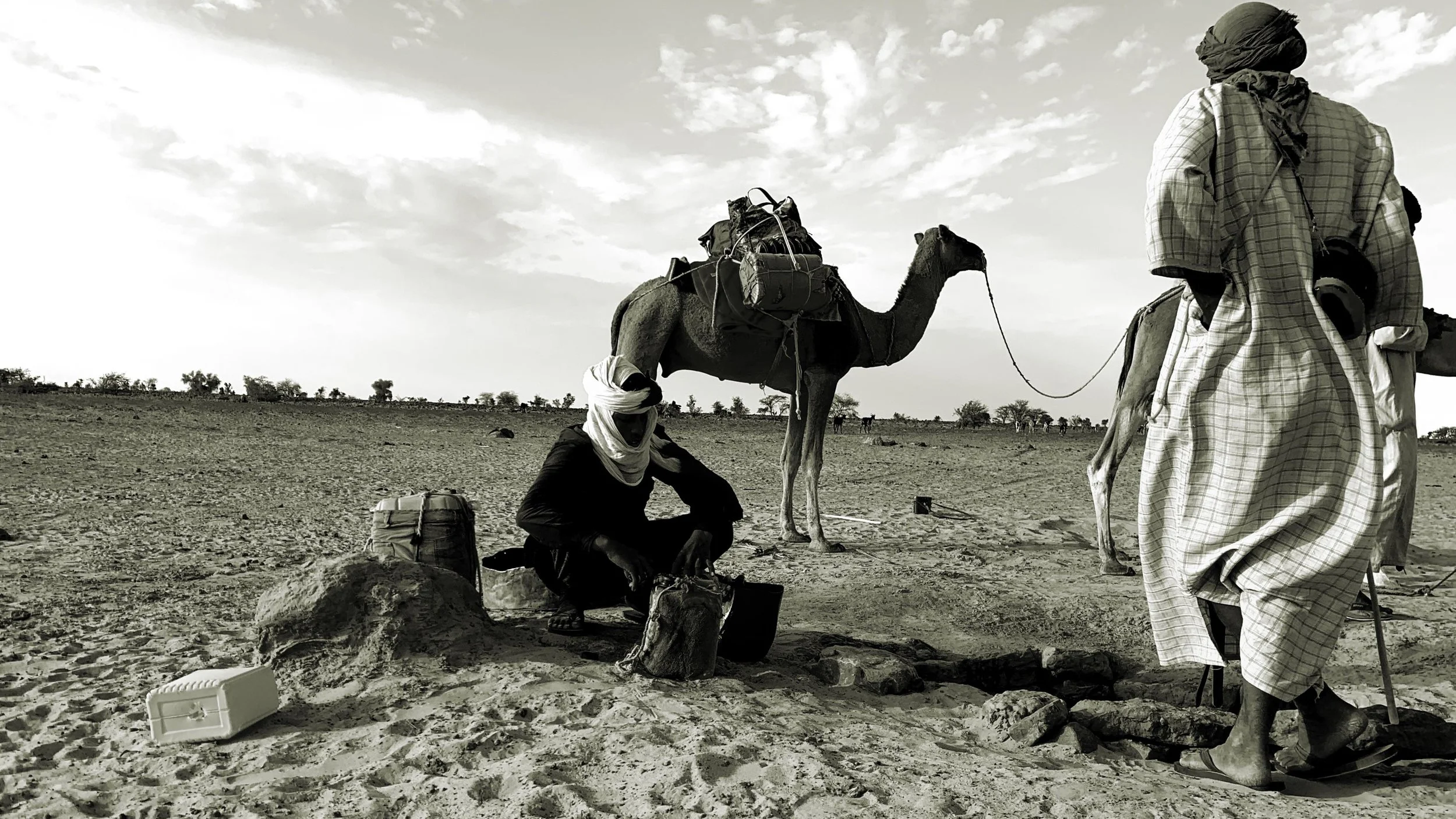
4.01 Tribes, Nomadism and Territory
First and foremost, and according to archaeological studies, it is worth recalling that we owe the foundation of the city of Ceuta to the Phoenicians who, by at least the 7th century BC, had already established a small nucleus on the isthmus beside the cathedral. Since then, at numerous points throughout history, the city has depended on the capitals of kingdoms, empires and civilisations located far beyond our immediate maritime and overland territories — the Eastern Mediterranean, the Sahel, the Middle East, the centre of the northern shore of the Mediterranean, in addition to the Iberian Peninsula or North Africa - via maritime and overland routes, as we have seen on the map of Ceuta's connecting routes.
It is precisely the geographical position of the Strait, as the meeting point of two continents, a sea and an ocean, that has fostered the city's links (in chronological order) to Byblos and Tyre in Lebanon, Rome in Italy, Carthage in Tunisia, Istanbul in Turkey, Damascus in Syria, Córdoba and Granada in Spain, Fez in Morocco, Marrakech in Mauritania and Morocco, Lisbon in Portugal, Madrid in Spain, and Brussels in Europe. That said, several of these cities have in turn belonged to different politico-administrative entities. For example, the capital of the Almoravid Empire was founded in Marrakech in 1070, but can we consider the Almoravids to be Moroccan? Or were they Mauritanian?
Without a knowledge of international law applied to different territories and across various historical periods, it is difficult to declare oneself in favour or against. However, I would like to raise certain concepts that are not usually taken into account or are conflated with others that have nothing to do with them; in fact, some of these lie behind many of the conflicts that still persist on our planet. This concerns the concept of the nomadic tribe, which in itself already encompasses two distinct ideas: tribal organisation and nomadism. Let us set aside another concept that shares considerable similarities but can prove far more complex: ethnicity.
In Morocco, there are still numerous territories where the tribal order prevails in daily life, regions in which the state has a presence and enforces laws, yet lacks total control (among other reasons because it does not own the land); territories in which governments can carry out their policies only with the acquiescence of the affected tribes. At present, more than 300 tribes are documented (Tribus du Maroc), even though the state does not recognise them as administrative entities. On occasion, cohabitation between tribal and state governance is fruitful; in other instances, it comes to paralyse the development of entire regions, as occurred in the Guelmim-Oued Noun region in 2017 and 2018 (Morocco initiated a process of regionalisation based on the Spanish experience, but the development of devolved powers has been very uneven depending on the territory).
This is merely an illustration of the complexity involved in understanding social and political dynamics in certain regions of contemporary Morocco, a complexity even more acute in the past, when the number of Arab, Berber, Jewish, Draoua, Sahrawi and Christian tribes (the latter remaining until the late 12th century), along with their groupings and alliances, was far greater, with balances that were difficult to maintain and constant warfare among them.
Hence, graphic representation using maps across each historical period cannot be reduced to a single entity, as if a dynasty exercised true control over all the tribes living within those boundaries, above all because in many regions, the number of nomadic tribes far exceeded that of sedentary ones. Contracts were signed between them to ensure the security of sedentary tribes against attacks by nomadic ones, especially those arriving from Arabia, such as the Banu Ma'qil, from the 13th century onwards, who managed to establish themselves in the desert regions of the Atlantic coast after expelling the Berber tribes that had inhabited them for centuries.
It is precisely the concept of nomadism that fosters confusion between the boundaries of a tribe's territory and the lands or regions across which it ranges, failing to account for the fact that the extent of their routes depended on agreements and alliances with the tribes owning the grazing grounds and all the lands they had to traverse. In that sense, inter-tribal alliances were concluded by mutual agreement or imposed by force, at times even subjecting an entire tribe to slavery. Conflicts between tribes could be cyclical, as Julio Caro Baroja describes in Estudios Saharianos: 'In October the people sowed. From November to May they lived in peace. When June arrived, everyone launched into war and livestock raiding, and as autumn approached peace was agreed, only to begin sowing once more.'
Thus the importance of alliances: they could give rise to a tribal confederation (not based on ethnic affinity, but on mutual interests), whose power could spawn a dynasty or simply exercise its power, influence and independence within the group. The clearest example is that of the Almoravids in the 11th century, a dynasty arising from the Sanhaja confederation, formed in the Adrar region of Mauritania (presumably at the Azougui oasis in Atar) by the Lamtuna tribes (who ranged between the Drâa and Senegal rivers), the Massufa (originally from northern Algeria, though over the course of history they gradually migrated south to the Sahara), and the Gudala (originating from the Mauritanian Atlantic coast). As we can see, defining the territorial limits of the Sanhaja proves complicated, even if we restrict ourselves to the era of their foundation in the 11th century.
The delineation of Sanhaja territory immediately prior to the formalisation of the Almoravid dynasty is by no means an isolated case; it is quite common to find Berber tribes originating from North Africa, that is to say, from Morocco, Algeria, Tunisia, Libya and Egypt, whose ranges of movement spanned the area between the Mediterranean Sea and the Sahel. This is not to say that they were in perpetual motion, but rather that they could spend years, decades or even centuries in a single region, interacting and intermingling with other tribes and ethnic groups, before moving thousands of kilometres to relocate to another region. On occasion, these ranges of movement were bounded by geographical features. Thus, the archaeologist Denise 'Djinn' Jacques-Meunié, in her work Le Maroc saharien des origines à 1670, explains that since antiquity Black tribes led a nomadic existence between the High Atlas Mountains and the Senegal River. One such tribe is said to be the Draoua, who still live in the Drâa Valley in Zagora (Morocco); others disappeared, such as the Bafour of Mauritania.
What nationality do we assign to such tribes? In truth, if at some point in history they lived anywhere from the Mediterranean coast to the Sahel, we could pick from a long list of countries, making it easy to shape nationalist identities according to specific interests.
Another essential point for understanding the history of Morocco concerns the types of relationship that the tribes maintained with the sultan. The term usually employed is 'allegiance', but an oath of allegiance during the Middle Ages did not carry the same meaning in Europe as it did in Morocco. In the former case, vassalage carried an implicit 'appropriation' of land by the lord or king (though exceptions existed). In Islam, the Western concept of allegiance was broken down into four distinct concepts: al-Bay'a, al-Wala' wa al-Bara', Ta'a, and al-Wafa' bil-'Ahd. The commitments were spiritual, political and moral in nature, but did not necessarily entail a surrender of land; consequently, the state was defined not by geographical borders, but by established allegiances.
From the 16th century onwards in Morocco, the Saadi dynasty began to differentiate between two types of territory: Bled el-Makhzen, featuring a total presence of the state within said territory, and Bled es-Siba, where a pact existed recognising spiritual allegiance, but not necessarily obedience and hence not state control over the tribes' territories.
It was not until the French protectorate that the decree or Dahir du 27 avril 1919 (26 Redjeb 1337) organisant la tutelle administrative des collectivités indigènes et réglementant la gestion et l'aliénation des biens collectifs was enacted (pág 375 del Bulletin Officiel de l'Empire Chérifien n.º 340), effecting a separation between sovereignty and ownership. From then on, the state exercised guardianship over tribal lands, which came to be designated as collective lands. This modification was introduced by the French as a means of attempting to 'pacify' the pre-Saharan regions fully controlled by tribes and fraught with numerous inter-tribal conflicts. It remained as such for a century, until the passage of a new law maintaining the same principles (Loi n° 62-17 relative à la tutelle administrative sur les communautés soulaliyates et la gestion de leurs biens de 9 août 2019).
Although these laws attempted to bring Western and Islamic law into convergence regarding land ownership, the International Court of Justice maintained in its time the distinction established by the Saadis between Bled el-Makhzenand and Bled es-Siba as decisive when considering the territories belonging to a country (Advisory Opinion of 16 October 1975 of the International Court of Justice). Once again, it is fitting to recall that the purpose of this text is not to elucidate who is right, but rather, in this specific chapter, to explain the complexity emanating from tribal territories.
One final concept that warrants clarification is that of the sultan as the representative of civil, political and military authority. The principal difference with a caliph is that the latter held religious authority, and the relationships that could be established between the two could vary. In Morocco, there were dynasties that declared their own caliphate and others that displayed allegiance to existing ones in other regions and continents, at times on a purely religious level, at others on a political and military one as well. Thus, the dependency of Morocco's inhabitants evolved throughout history:
From the arrival of Islam until the Great Berber Revolt of 740, they were subject to the Umayyad Caliphate of Damascus (Syria).
Under the Idrisids (789–974), they were independent.
The Almoravids (11th to 12th centuries) were subject to the Abbasid Caliphate of Baghdad (Iraq).
The Almohads (12th to 13th centuries) declared their own caliphate.
The Marinids (13th to 16th centuries) submitted to the Abbasid Caliphate of Cairo (Egypt).
The Saadis (16th to 17th centuries) proclaimed themselves caliphs.
The Alaouites (17th century to the present) are independent, holding the title of 'Commander of the Faithful' (Amir al-Mu'minin), and thus require no religious submission to any caliph.
Did submission to a caliphate mean that the inhabitants of a territory governed by a dynasty were administratively dependent on the caliph? Generally speaking, it was a symbolic matter of a legal and religious nature; that is to say, the Almoravids were a dynasty dependent on Baghdad, but this does not imply that the inhabitants of the Adrar should be regarded as Iraqi. As we have seen, there were indeed situations in which the Umayyad Caliphate of Damascus did exercise administrative control over North Africa, meaning that whatever military actions they might carry out were conducted in the name of the Umayyads.
Now, just as the relationship between caliph and sultan operated at different levels throughout history, the same applies to the relationship between the sultan and the tribes, as well as among the tribes themselves. In this regard, if a tribe accepts spiritual allegiance to the sultan while retaining sovereignty over its lands, can it truly be asserted that the territory belongs to the sultan?
By highlighting these concepts and their historical variations, it becomes clear how easy it is to draw borders and defend them using reasoning based on superficially interpreted concepts, when reality is in fact far more complex.
4.02 Religions, Nationalisms and Bordes
To complicate the historical reasoning examined thus far even further, borders have been justified on religious grounds both in Europe and in North Africa, in the specific case of the Strait, as though Islam were synonymous with Moroccan, and Christianity with Spanish. In this way, certain extreme stances, past and present, attempt to assert that the exclusive presence of one religion or another can serve as an argument for defining belonging to one country or another.
A Christian presence in Ceuta is documented at least from the mid-4th century, as attested by the remains of the Palaeochristian basilica. The arrival of Islam in the 8th century did not prevent an almost continuous presence of a Christian population, which enjoyed diplomatic representation, rights and protection: the Almoravids (11th century) entered into agreements with the Republic of Pisa; the Almohads (12th–13th centuries) with the Republic of Pisa, the Republic of Genoa and the Republic of Marseille (The Lordship of Ceuta in the 13th Century, María del Carmen Mosquera Merino); the Marinids (13th and 14th centuries) with the Crown of Aragon... (History of Ceuta. From Origins to the Year 2000).
In the Islamic territories of the Peninsula during al-Andalus, Christians and Jews enjoyed a covenant of protection (dhimma) and possessed rights; that is to say, these were not exclusively Muslim territories. Similarly, Muslims (Mudejars) also lived in Christian territories with their own rights, until the 16th and 17th centuries, when conversion began to be demanded as a condition for remaining on the Peninsula.
It is true that with the arrival of the Portuguese in Ceuta in 1415, the constant state of warfare that endured until the end of Moulay Ismail's siege (1694–1727) made it impossible for Muslims to reside in the city. Yet this did not prevent small-scale commercial exchanges; moreover, entry into the city was regulated — albeit without overnight stays — much as is the case today with Moroccans classified as cross-border workers (Mogataces y regulares, Francisco Olivencia).
However, following the signing of the 1767 Treaty of Peace and Commerce, which Sultan Mohammed III proposed to King Charles III (1 and 2), an unprecedented period in relations between the two kingdoms began. The treaty made mention of Ceuta in two of its articles:
Article 10
Spaniards who desert from the garrisons (presidios) of Ceuta, Melilla, Peñón and Alhucemas, and the Moors who take refuge within them, shall be returned immediately and without the slightest delay by the first governors or wardens who apprehend them, unless they convert to another religion.
Article 19
The territorial expansions requested by His Catholic Majesty in the four garrisons are strictly prohibited by law: from the time they were taken, Their Imperial Majesties fixed their boundaries upon the advice of their councils (taifas) and scholars, and swore never to alter them—an oath observed and maintained by all emperors, making it impossible for His Imperial Majesty to grant them, despite his royal inclination to extend much further. Nevertheless, in order to renew said boundaries and mark them with stone pillars, he appoints on his part the governor (alcaide) of Asilah, Governor of Tetouan; and whatever the latter shall agree upon and mark as the boundary, in accord with the commissioner appointed by His Catholic Majesty, His Imperial Majesty shall hold as agreed and marked, as shall the plenipotentiary of His Catholic Majesty.
Article 19 constitutes a recognition of the boundaries the city possessed at that time, boundaries that were expanded as far as the present-day neighbourhood of Hadú (a name derived from the Arabic hudud, meaning 'border') in the Marrakech Agreement (1785), and which were ratified in the Treaty of Peace, Friendship, Navigation, Commerce and Fishing between His Catholic Majesty and His Moroccan Majesty, concluded and signed in Meknes on 1 March 1799 (1 and 2).
Article 15
The boundaries of the hinterland of Ceuta and the extent of land for the grazing of livestock of that garrison shall remain on the same terms as were demarcated and fixed in the year 1782.
This treaty became void following the War of 1859–1860, after which the Treaty of Wad-Ras was signed. This led to further treaties that were far more advantageous to Spain given its position of strength, bringing about a radical shift in Hispano-Moroccan relations that would culminate decades later in the process of colonisation that established a Spanish protectorate in Morocco.
Crucial to that war was the involvement of the "Mogataces" Moorish Company of Oran (Compañía de Moros Mogataces de Orán), established in Algeria in 1734 (The Mogataces: Spain's Early Moorish Soldiers in Africa, Enrique Arqués and Narciso Gibert). One hundred of its members arrived in Ceuta in 1791 (representing 2 per cent of the population), months prior to Spain's abandonment of Oran and Mers El Kébir (Mazalquivir). Following the African War, the Moorish Rif Rifle Company (Compañía de Moros Tiradores del Rif) was created (merged in 1861 with former Mogataces); subsequently, in 1886, they were unified alongside the Ceuta Light Cavalry Squadron (Escuadrón Cazadores de Ceuta) and the Sea Company (Compañía de Mar), giving rise to the Ceuta Volunteer Militia (Milicia Voluntaria de Ceuta). This in turn transformed in 1914 into the Indigenous Regular Forces Group (Grupo de Fuerzas Regulares Indígenas), today the Regular Infantry Forces Group (Grupo de Fuerzas Regulares de Infantería), which represents the most significant (though not sole) origin of the Muslim population in 21st-century Ceuta.
However, it can be asserted that the Muslim population is not exclusively of Moroccan origin; there is also an Algerian component, as there are still families descended from the Mogataces in the city, such as those bearing the surnames Almanzor and Kaddur (¿De dónde vienen los apellidos menos frecuentes de Ceuta? Luis Parodi). In the early 20th century, there was also a significant influx of Jews arriving from Morocco and engaged in trade (Demographic Analysis of Ceuta 1801–1930, Antonio Carmona Portillo).
This chronology serves to explain how Christian, Muslim and even Jewish populations — both within the city itself and on both sides of the border — maintained commercial, cultural, social and political relations almost uninterruptedly since the advent of Islam. The fact that the population is now predominantly Christian and Muslim should not be viewed as an anomaly; rather, it is a return to what the city has been since the emergence of Islam in North Africa.
4.03 Colonisations
Contemporary relations between Spain and Morocco are often still shaped by the colonial legacy, as numerous academic studies demonstrate, to the extent that within the consciousness of Moroccan academic, artistic and political collectives, there is a constant reproach towards the Spanish (and French), even if intellectuals such as Abdallah Laroui are critical of this entrenched victimhood: 'Why then remain fixated upon European colonisation, the last in a long line, if it ended a generation ago? Why continue to blame it for all the ills of the Third World, from economic disarray to food scarcity? Has it not perhaps become a mere alibi? Has the time not come to finally place it in a historical perspective and, in a sense, close the file?' (Morocco: Islam and Nationalism, Abdallah Laroui).
Furthermore, some contemporary internal problems derive from the inability to re-establish the balance of power between the makhzen and the tribes, which was interrupted as a result of colonisation (Failed Regionalisation, Bernabé López. El País); the failure to do so is not the responsibility of the Spanish, but of Moroccans themselves. In a way, a Moroccan social class exists that operates as the heir to a colonial force. In any case, the negative effects of the protectorate cannot be denied, nor can we forget that Morocco was not only colonised by Spain during the 19th and 20th centuries: the arrival of Arab tribes from the Arabian Peninsula was another colonisation that still persists today, imposing its religion, language and culture upon a predominantly Berber population. Likewise, it should be considered that 'Moroccans' also colonised other territories outside their present-day borders, such as Mauritania and Mali, as well as parts of the Maghreb and the Iberian Peninsula.
In reality, much like Ceuta though on a different scale, Morocco has both suffered from and benefited from its geographical position in North Africa, which accounts for the richness of its culture and the complexity of its society. However, Moroccan nationalists deny these roots without considering that all Moroccan dynasties, with the exception of the Almohads, arrived from other geographies: the Idrisids from Iraq; the Almoravids from Mauritania; the Marinids from Algeria; the Saadis from Saudi Arabia; the Alaouites from Saudi Arabia. In all cases, decades and even centuries elapsed between their settlement in 'Moroccan territory' and their attainment of power as a ruling dynasty, highlighting the historical ties Morocco has maintained with other African and Middle Eastern territories.
Nor can the origins of dynasties be used to delegitimise Moroccan culture or nationality, given that in Spain the two most important royal houses are not of Spanish origin either: the Bourbons originate from France and the House of Habsburg from Austria, the former coming to rule over a territory corresponding to France, Spain and parts of Italy, while the Habsburgs controlled Central Europe and parts of Southern Europe under the banner of the Holy Roman Empire.
4.04 States and Nations
According to the RAE (Real Academia Española), a nation is a 'body of people of the same origin who generally speak the same language and share a common tradition'. In Islam, the concept closest to the European idea of a nation would be the umma; although its meaning has been interpreted in various ways throughout history, it could be translated as community, with its limits determined not by physical borders but by the reach of military power exercised by dynasties or caliphates. Later, Ibn Khaldun developed the concept of asabiyyah to describe a tribe or group of tribes that ultimately established a dynasty or dawla. During the 19th century, to counteract European power, the Ottomans began to organise their empire in the image and likeness of Western powers, shifting the meaning of dawla, which then came to mean country.
What happened in medieval Islamic Spain? One cannot speak of Spain as a nation because no such concept even existed at that time. The European concept of a nation emerged in the 18th century; until then, the term was used to group people from a particular region or city (from the Latin natio or nationem, which in turn derives from the verb nasci, 'to be born'). The major shift occurred when nationhood became associated with sovereignty.
However, if we apply the RAE's definition of a nation to different moments in history when that body of people inhabited the same region — even if it stretched across both sides of the Strait, for example, during Phoenician, Roman, Islamic, or even Christian times — we see that the 'nation' of each of those eras had boundaries that do not match today's; indeed, they would overlap. By all this, I mean that our relations with North Africa cannot be restricted to the advent of Islam and brought to an end with the conquest of Granada in 1492. That relationship is enduring and persists in present-day Spain thanks to the communities, tribes and ethnic groups that lived simultaneously in both North Africa and the Iberian Peninsula, and, of course, thanks to the North African Spanish population of Ceuta, Melilla, Peñón de Vélez, Peñón de Alhucemas, and the Canary Islands.
Furthermore, the RAE defines a state as a 'sovereign country, recognised as such in the international order, established in a given territory and equipped with its own governing bodies', and also as a 'form of political organisation, endowed with sovereign and independent power, integrating the population of a territory'. The contemporary idea of the state began to take shape in the 16th century, but it was not until the signing of the Peace of Westphalia treaties in 1648 — which brought an end to the Thirty Years' War — that what we understand as a state today was defined, establishing the principle of territorial sovereignty: each state possesses exclusive authority within its borders, and no external power (such as the Pope or the Holy Roman Empire) can intervene in its internal affairs.
Equating these meanings, one could say that the first state in Morocco appeared in the 8th century with the Idrisid dynasty, whereas in Europe it was not until the end of the Middle Ages, with the demise of feudalism, that the first states (according to today's understanding) emerged.
4.05 Cross-Border Ethnographies
We have already noted that there is a tendency to oversimplify al-Andalus as an Islamic conquest — and therefore one by Muslims — and consequently as an extension of Moroccan territory. The reality was quite different.
In the first place, the initial waves were composed of Berber tribes under the command and authority of the Arabs of the Damascus Caliphate, who, together with Christians converting to Islam (Muladís), formed the core of the population; over time, the Muladís grew to represent a significant demographic weight (Christians and Muslims in Medieval Spain (711–1250), Thomas F. Glick). With the emergence and arrival of successive dynasties, the influx of people reaching the Peninsula from the Sahel, North Africa and the Middle East increased the ethnic and tribal diversity of the populace. The passage of centuries did not lead to a homogenisation of these populations; certain tribes continued to practise endogamy, preserving their own cultures and traditions.
On the other hand, there was no single dividing line representing the boundary between Islam and Christianity; rather, multiple intermingled territories emerged where authority could be exercised by either Christians or Muslims. Historical and archaeological research has demonstrated that cities comprised diverse communities, with their distinct quarters (juderías, morerías), landmark buildings (mosques, churches, synagogues...), duties and rights (as previously noted, Christians and Jews were religious minorities known as dhimmis who, under the Quran, enjoyed protection along with their own legal status). The capture of a city by Muslim or Christian forces did not entail the immediate expulsion of the 'invaded' communities; in most cases, they remained. Nevertheless, each dynasty and kingdom had a distinct impact on the treatment of these different communities, with their proportions fluctuating considerably with each shift in power, occasionally even facing total disappearance following subsequent expulsion decrees.
It was precisely the expulsion decrees enacted by both Muslims and Christians that triggered a series of migratory movements at various historical junctures in the opposite direction — that is, from north to south, from al-Andalus to North Africa — comprising Arabs, Berbers, Jews and Christians. The principal ethno-religious groups resulting from this process of convivencia (coexistence), which endured for nearly ten centuries, were as follows:
Mozarabs: Christians who lived in Muslim territory and adopted their culture. Some were expelled in the 12th century by the Almoravids and settled in Fez, Meknes, Salé and Marrakech. Despite being exiled, and given their expertise in construction techniques and craftsmanship, this population eventually gained acceptance within the societies of the aforementioned cities. Of even greater significance were those who formed part of the Christian militias that served, first, the Almoravid sultans in their struggles against the Almohads, and later the victors — the Almohads themselves — even though the latter decreed years later the obligation to convert to Islam under threat of the death penalty for refusal (Historia de los mozárabes de España, Francisco Javier Simonet).
Muladís: Christians who converted to Islam (the majority of the population). Between the 13th and 17th centuries, they progressively settled in Morocco, Algeria and Tunisia as the Christians reclaimed territory (Al-Andalus: Anthropological Structure of an Islamic Society in the West, Pierre Guichard; Al-Andalus 711–1492: Une histoire de l’Espagne musulmane, Pierre Guichard).
Sephardim: Jews expelled at the end of the 15th century by means of the Alhambra Decree of 1492; they established themselves in Morocco (Tetouan, Tangier, Fez, Larache and Ksar El Kebir), Algeria, Turkey, Greece, Italy, the Netherlands... From the 19th century onwards, some settled in Ceuta and form part of present-day Ceutan civil society (Los judíos en la España moderna y contemporánea, Julio Caro Baroja).
Mudejars: Muslims who remained living in territories reconquered by Christians, initially retaining their religion and laws. They departed between the 13th and 16th centuries after refusing baptism, passing first through the Kingdom of Granada and subsequently settling in Fez and Tetouan (Los moriscos antes y después de la expulsión, Míkel de Epalza).
Moriscos: Descendants of the Muslims of al-Andalus residing in the Peninsula who, following the fall of Granada in 1492, were forced to convert to Christianity. Many emigrated in the early 17th century, it is estimated there were nearly 300,000, of whom 40,000 settled in Morocco: in Tetouan, Tangier, Chefchaouen (Xauen), Fez, Rabat and Salé (where they even went so far as to establish an independent republic). They also reached Algeria (Algiers, Oran, Tlemcen), Tunisia and Turkey. Curiously, the Moriscos were treated as foreign communities, much in the same way that Europeans of Maghrebi origin are regarded when settling in Morocco (Historia de los moriscos. Vida y tragedia de una minoría, Antonio Domínguez Ortiz y Bernard Vincent; Los moriscos del Reino de Granada, Julio Caro Baroja).
To these ethnic groups, others could be added based on the languages they spoke that were unrelated to their religion: Arabic-speaking Christians (musta'rib), Romance-speaking Muslims (ladino), and rural Berbers who maintained their language and culture autonomously from Arabic. Consequently, throughout much of al-Andalus, as many as two or three languages were spoken within the very same city.
This social richness did not always translate into harmonious coexistence; revolts between communities were frequent and were not confined to religious differences. The most prominent were those of the Berbers against the Umayyad Caliphate, which resulted in forced emigration to the Maghreb during the 8th and 9th centuries, notably giving rise to the arrival in Fez of a large population that constructed the district of the medina known as the Andalusian Quarter.
As we have seen, the ethnographic legacy of al-Andalus is distributed today primarily between Spain and Morocco, though not exclusively.
The manifold interweavings of ethnic groups in al-Andalus make the demarcation of borders difficult; however, this dynamic is not unique to territories where a confrontation of religions occurred, in my view, it is more closely linked to geography and its strategic importance. If we turn to Mauritania, we see how the advent of Islam similarly caused an upheaval, adding to that which had been unfolding for centuries through the migrations of nomadic tribes and the peaceful or belligerent interactions of ethnic groups arriving from the Maghreb, the Middle East, Mali, Senegal, Niger... Berbers, Arabs, Wolofs, Fulanis, Soninkes, Bafours, Jews... This diversity further complicates border demarcations based on geographical as well as ethnic origins. Let us examine a few examples involving some of the principal tribes that inhabit the Atlantic coast of the Sahara (Estudios Saharianos, Julio Caro Baroja).
Ulad Tidrarine: Descendants of the Almoravids, specifically of Sultan Abu Bakr el-Lamtuni (Almoravid emir of the Mauritanian Adrar in the 11th century). They claim descent from the Ansar (the inhabitants of Medina who supported the Prophet Muhammad). According to their oral tradition, they descend from an eponymous ancestor named Hannin (aliased as Tidrarin), established during the medieval Arab expansion. They settled predominantly along the Atlantic coastal strip, extending from Cape Bojador to the mouth of the Drâa River.
Ulad Delim: Direct descendants of the Arab migrations of the Banu Ma'qil (originally from the Arabian Peninsula), specifically the Beni Hassan branch that advanced through the Maghreb into the Sahara between the 14th and 15th centuries. They first attempted to settle in the Ziz Valley (in the vicinity of Sijilmasa), subsequently in the Drâa Valley (Zagora), and finally, in the 15th century, succeeded in establishing themselves in the region of Oued ed-Dahab, expelling the Berber tribes established within that nomadic territory.
Erguibat: Possessing both Arab and Berber roots (from the Sanhaja confederation, co-founders in turn of the Almoravid dynasty), they trace their genealogy back to the Idrisid dynasty through their founder, the 16th-century Sufi preacher Sidi Ahmed al-Reguibi, who established himself in the Saguia el-Hamra basin. They came to dominate a vast territory and held control over the major caravan routes connecting southern Morocco, Algeria, Mauritania and Mali.
As we can see, the nomadisation of tribes and ethnic groups, their coexistence, and the ethnic intermingling matured over many years make it almost impossible to establish borders across the northern half of the African continent based exclusively on ethnic purity, and still less according to the demarcation of territories that were constantly shifting throughout history.
4.06 Intersecting Civilisations
The complexity of the ethnographic organisation of societies inhabiting strategic border territories contrasts with the ease with which dividing lines are drawn, even between civilisations. The term civilisation, much like nation and state, has evolved throughout history. According to the RAE, it is the 'body of customs, knowledge and arts proper to a human society'. However, its etymology derives from the Latin civis ('citizen') and civitas ('city'), and since the Middle Ages it has been a concept associated with sedentary populations organised within a physical space (the city) — as well as a social and political one — where agriculture is key for a population to become sedentary and evolve into a civilisation. In this sense, the first civilisation would be the Persian one, sedentarisation having been made possible by the existence of oases arising along riverbanks.
Yet this concept excludes nomadic tribal societies; one need only study the social organisation of, for instance, the tribes that inhabited the Sahara around the jma'a (assembly), alongside the spatial distribution and structure of nomadic camps of up to 250 haimas (tents) and 1,500 people established regularly (and recurrently) wherever a water source was to be found, be it a river, lake, well or spring (with agricultural development on a smaller scale than in oases and confined to a specific timeframe) and the social classification and division of labour within a nomadic camp (such as those studied in the Sahara in the 1950s by Julio Caro Baroja and described in his work Saharan Studies) to understand that the term civilisation could also be applied to these modes of organisation and forms of inhabiting places. This stands in contrast to what Charles Redman posits in The Rise of Civilisation, in which the tribe is merely a stage prior to civilisation, evolving from band to tribe, then to chiefdom, and finally to state.
Even if the urban component did not exist at the outset, the root civitas could not be used, though it could be defined by another term associated with a camp (in Latin campus) or with nomads (in Greek nomas). One proposal could be campunomasy, for which the definition adopted by the RAE could be: 'a body of customs, knowledge and arts proper to a nomadic society'.
Now, what of those nomadic tribes that organise themselves into confederations with a power structure and later make the leap to establishing a dynasty? To attain the designation of 'civilisation', they would have to become sedentary in existing cities or found new ones, as did the Idrisids (founding Fez), the Almoravids (founding Marrakech), the Almohads, the Marinids, the Saadis and the Alaouites. In other words, nomadic desert tribes lie at the very origins of Morocco from the 8th century onwards. Could the dynasties that emerged from the Sahara therefore be defined as civilisations? In their initial phases, all were composed of nomadic tribes from the Sahara, and all established their capitals in Morocco.
If this were so, what would then be the foundation of Morocco's civilisation? At present, the most widely accepted term would be 'Arabo-Amazigh', but in my view this is the result of placing the concept of Arab civilisation alongside the Berber one, when in reality, ever since the arrival of Islam, they intermingled in diverse ways, giving rise to multiple dynasties with tribes leading a nomadic existence across various regions, where there was also a highly significant Sahelian component.
It would be inaccurate to stop at the Arabo-Amazigh level, given that the Berbers coexisted with other civilisations — specifically the Phoenician, Greek and Roman — much like the Arabs who, in addition to the three mentioned, also interacted with the Persians (regarded as the first civilisation). This coexistence gave rise to a heritage that endures to this day: for example, the cities founded by the Phoenicians on the southern shore of the Strait, such as Ceuta and Tangier; the industries developed by the Romans, such as fish-salting along the Strait; and agriculture in various regions such as the Gharb plain (Tingitana in Late Antiquity, 3rd–7th centuries; Noé Villaverde Vega). Nor should we overlook the architectural and technological solutions adopted by so-called Islamic architecture in both North Africa and the Iberian Peninsula (Continuity: Rome, Byzantium, the Islamic East and Hispano-Muslim Culture. Architecture and Decoration, Basilio Pavón Maldonado), such as the concept of the courtyard house or hydraulic engineering on both a large and small scale (since Roman times, materials have improved, but the underlying hydraulic concepts remain unchanged). The hammams or Arabic baths represent an evolution of Roman baths or thermae (Roman Hydraulic Engineering, Carlos Fernández Casado); the structures of aqueducts were adapted into architecture to span vast spaces, as in the Mosque of Córdoba... This technological heritage becomes even more intertwined when we consider that during the Almoravid and Almohad dynasties, Andalusi engineers were summoned to design and construct the hydraulic infrastructure of Marrakech, a complex network of rivers, canals, channels, khattaras (underground channels), basins and neighbourhood distribution fountains required to supply water to both the medina and agricultural plots in what was a joint oasis and urban project (The Orchards of Marrakech in Written Sources: Bustan, Buhayra, Yanna, Rawd and Agdal, 12th–20th Centuries, Julio Navarro Palazón and José Miguel Puerta Vílchez), or rather, an oasis containing a city within it. It seems clear that these Andalusi systems were based on the Roman hydraulic heritage in the Peninsula that was still in use; the Andalusis refined it and subsequently applied it in North Africa.
As we can see, the Phoenician-Greco-Roman heritage reached North Africa directly across the Mediterranean, but also in a form modified within the Peninsula during the Islamic period. If to these influences we add the technology imported by the population that settled in Morocco after being expelled from the Peninsula across various centuries, we see that a large part of Moroccan heritage has its roots in Greco-Roman heritage.
Moroccan roots must also be sought in the Sahel. Long before the arrival of Islam, nomadic Berber tribes from North Africa already had a range of movement that included the Sahel, an exchange that was at times sporadic, at others endured for centuries, and in some cases became permanent, as demonstrated by the Berber tribes of contemporary Mauritania. The transition zone between the Sahel and the Sahara was conducive to the meeting and development of cultures and traditions associated with tribes and ethnic groups such as the Wolof, Fulani and Soninke, which gave rise to empires of varying territorial reach centred on present-day Mali and the Senegal and Niger rivers: the Ghana Empire (8th to 13th centuries); the Almoravid dynasty (11th to 12th centuries); the Mali Empire (13th to 16th centuries); and the Songhai Empire (15th to 16th centuries). These may seem distant regions, but it is worth remembering that the Almoravids reached as far as the north of the Peninsula, and that trade (and consequently cultural exchange) between the Sahel and the Iberian Peninsula remained constant practically until the 17th century, first under the Arabo-Amazigh dynasties, and later with Spain and Portugal until the 16th century, when the Songhai Empire collapsed (following a conquest of Mali by the Moroccan Saadi dynasty, with an army commanded by Andalusi Christians) and gold trading shifted towards the Americas.
If we shift perspective and examine Spanish roots, what comes to mind first are the Greco-Roman and Judeo-Christian civilisations, alongside the seven centuries of al-Andalus, which, as we have seen, is not an exclusively Moroccan legacy, but also Syrian, Tunisian, Algerian and Mauritanian, if we speak of territories; or Arab, Amazigh and Sahelian, if we speak of civilisations.
Comparing the roots of the present-day kingdoms of Spain and Morocco, we can assert that we share virtually the same foundational civilisations, and that it is only over the last few centuries that a divergence in the evolution of our societies has occurred. Yet this state of affairs is now being reversed by contemporary migratory processes from various Arab countries (principally Morocco and Algeria), bringing Arabo-Amazigh culture back into numerous Spanish cities, much as it was six centuries ago.
If we turn our focus to 21st-century Ceuta, with its presence of Christians, Muslims and Jews, we realise that we represent the common denominator of the union of two cultures or even civilisations commonly identified with Spain and Morocco, constituting an immense richness.
Credits texts, photos and drawings: Carlos Pérez Marín